Dubai’s Villas as a Clue: What Architecture Reveals About the City’s Rise
Dubai’s modern villas are more than luxury homes - they are physical records of how the city grew, planned, and attracted global capital. By looking closely at architecture, materials, and living patterns, we can better understand how Dubai transformed itself into one of the world’s most prosperous urban experiments.
January 21, 1970 at 11:03 AM•By Jordan Bowen


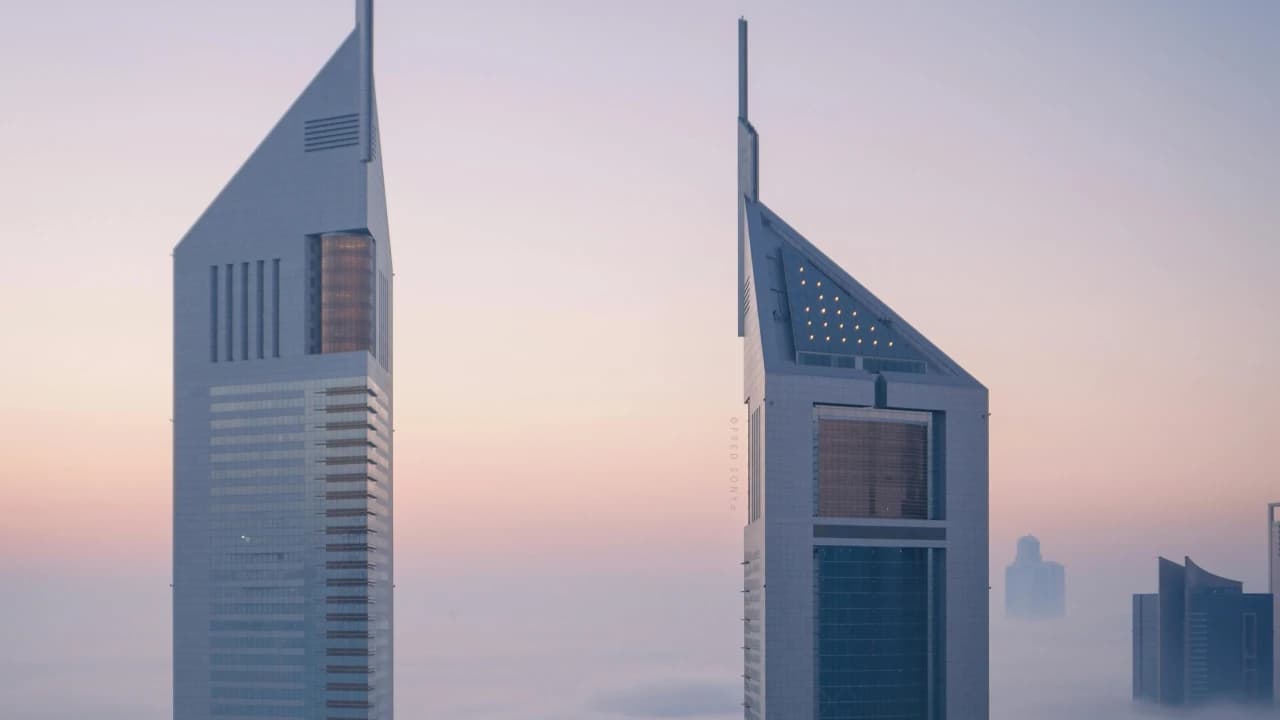
Two rising towers in the Dubai's skyline.
Visitors often arrive in Dubai with the same question: how did this place become so wealthy, so quickly? The answer is rarely found in a single statistic or headline. Instead, it is embedded in the city’s built environment - especially in its villas.
Modern and luxury villas in Dubai function as quiet signals of how the city thinks about land, climate, ownership, and long-term planning. They reflect a deliberate approach to space, privacy, and performance that differs sharply from dense, high-rise urban models elsewhere. While towers dominate the skyline, villas tell a subtler story: one of controlled growth, selective zoning, and confidence in permanence.
These homes appeal to residents who value calm and functionality as much as visual impact, and to buyers drawn to clarity - clear property rights in designated zones, clear infrastructure investment, and clear rules around ownership. In a city known for spectacle, villas represent restraint, intention, and durability.
Rather than asking what villas cost or what they yield, a more revealing question is why they are built the way they are. Architecture in Dubai is rarely accidental. It responds to heat, dust, water scarcity, and long usage cycles, while also signaling the expectations of an internationally mobile population.
Understanding this design logic helps explain how Dubai aligned lifestyle, planning, and capital - without relying on vague narratives about luxury alone.
Modern villa design in Dubai is often mistaken for simple minimalism, but in reality it operates more like a tuned system. Overhangs, fins, screened terraces, and inward-facing courtyards are arranged to modulate heat, light, and privacy much like controls on a soundboard. The result is not visual excess, but balance - spaces that stay cool, shaded, and composed even under extreme conditions. There is a noticeable quietness to well-designed interiors, a sense that the environment has been dampened, softened, and brought into rhythm.
Materials reinforce this calibrated approach. Stone, engineered timber, insulated wall systems, and marine-grade finishes are selected for endurance and consistency rather than novelty. Details such as concealed drainage, sand-resistant thresholds, and storm-capable roof systems reflect long-cycle thinking. These homes are less about visual statements and more about staying in tune over time, absorbing stress without distortion.
Luxury, in this context, expresses itself through efficiency and flow. Sound separation between rooms, shaded outdoor zones that remain usable for much of the year, and layouts that allow daily life to move without friction all contribute to a smoother cadence. Smart systems quietly regulate lighting, climate, water, and energy in the background, reducing spikes and smoothing peaks. Nothing calls for attention, yet everything works in sync.
Location follows the same logic. Dubai’s villa communities are positioned deliberately - coastal, inland, and master-planned zones each serving a specific role within the wider urban composition. Infrastructure, plot sizing, and services are designed for continuity, not improvisation. The consistency is what stands out. Like a city set to the right frequency, growth here feels paced, repeatable, and dependable - one of the less visible, but most telling, signals of how Dubai aligned ambition with lasting success.
Life in a Dubai villa follows a rhythm shaped by climate and design. Mornings begin outdoors in shade, afternoons retreat indoors, evenings return to courtyards and terraces. Kitchens are divided between presentation and function. Gardens are planned as usable rooms rather than decoration.
Ownership, too, reflects structure. Costs are planned, maintenance cycles anticipated, and upgrades approached methodically. This is not accidental - it is the byproduct of a city that learned quickly what fails in harsh environments and adjusted accordingly.
Dubai’s villas offer a useful lens through which to understand the city’s rise. They demonstrate how ambition matured into systems, how experimentation gave way to standards, and how wealth became embedded in planning rather than display.
By reading architecture carefully - materials, layouts, orientation, and infrastructure - you see a city that invested not just in visibility, but in function. That decision, repeated across decades, explains more about Dubai’s prosperity than any single industry or headline ever could.
Sponsored links



Further Reading

Joint Structure and Movement: An Overview of What Research Explores
January 2, 1970 at 10:17 AM

How People Choose a Winter Jacket: What Actually Matters When Temperatures Drop
January 21, 1970 at 10:27 AM

Beyond Bland: The Mediterranean Secret to Flavor-First Healthy Snacking
January 21, 1970 at 10:56 AM